Madrid is an excellent place to explore Spanish food, but choosing a paella cooking class is not as simple as selecting the first activity with a pan in the photograph. Some experiences are compact city-centre lessons. Others include a market visit. A few turn the class into a full day outside Madrid, combining cooking with village life, a shared meal and time away from the crowds.
The right choice depends on what you want to take home: a recipe, practical kitchen skills, a social meal, a family activity or a wider experience of Spain. This guide explains what to compare before booking a paella cooking class in Madrid or a hands-on cooking day beyond the city.
What should a good paella cooking experience include?
A useful class should do more than provide lunch. It should help you understand the process well enough to recognise the important decisions: choosing the rice, building flavour, controlling the liquid and heat, arranging ingredients and allowing the rice to rest. The details will vary with the recipe and the equipment, but guests should be involved in the work.
Look for a clear description of the experience. Does everyone prepare ingredients? Do guests cook in pairs or as one group? Is the paella made from the beginning, or is part of it prepared before arrival? Will you eat the finished dish together? There is no single correct format, but the listing should make the level of participation clear.
Official Madrid tourism information describes participatory cooking schools where visitors prepare paella and other Spanish dishes, including options taught in English and designed for friends, families or students without previous cooking knowledge. Spain’s official tourism portal also categorises cookery courses as part of the country’s food-and-wine experiences. These are useful signals when comparing activities: practical participation, cultural context and a meal should work together.
City cooking class or countryside day trip?
Choose a central Madrid class when time is limited
A city class is usually easier to fit around museums, neighbourhood walks and evening plans. Many are close to markets or public transport. A typical format lasts a few hours and may include ingredient shopping, paella, a starter or tapas, sangria and a shared lunch.
This is often the best option if your main priority is learning a recipe without leaving Madrid. Check the meeting point, finish time and whether the market element operates every day, as market opening hours can affect the programme.
Choose a countryside cooking day for a broader experience
A rural cooking experience can turn the meal into a day trip. Instead of moving quickly between city attractions, you travel to a smaller place, cook with local hosts and eat in a more personal setting. The journey, landscape and hospitality become part of the experience.
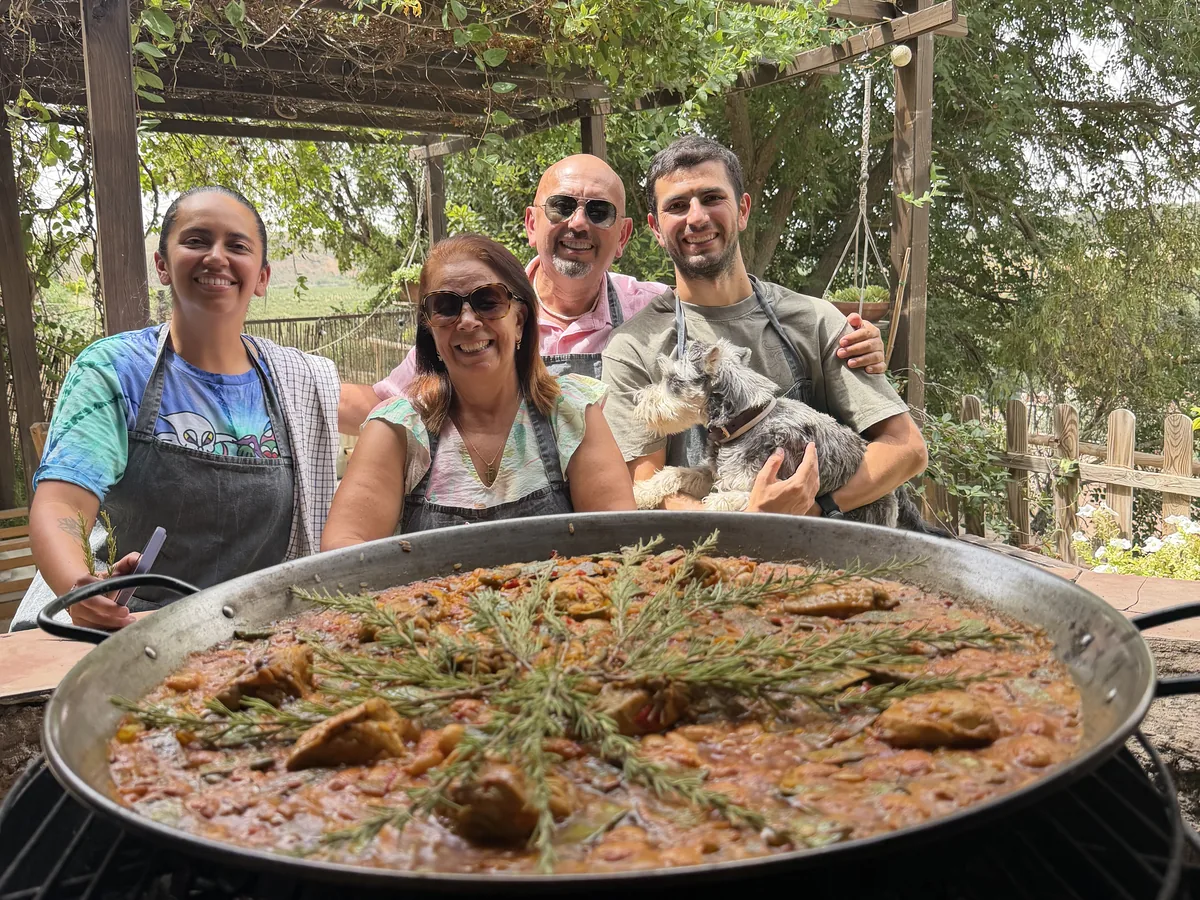
Adventures in Unspoiled Spain’s Paella Cooking Experience takes place in Zorita de los Canes, a small village beside the River Tagus a little over an hour from Madrid. Guests prepare paella and Spanish omelette, then share the meal. Private pick-up and return transport from central Madrid are included, so the day does not require a rental car or rural driving.
This format suits travellers who want cooking to be part of discovering a different side of Spain. If you are comparing several ways to leave the city, our guides to food and wine day trips from Madrid and nature day trips from Madrid explain the main differences.
Eight questions to ask before booking
1. Is the class genuinely hands-on?
Words such as “workshop”, “demonstration” and “cooking experience” can describe very different levels of participation. If you want practical skills, look for a clear statement that guests prepare and cook the food. A demonstration may still be enjoyable, but it is not the same product.
2. Which language is used?
Confirm the teaching language rather than assuming it from the booking website. English-speaking travellers should be able to follow safety instructions, understand the sequence and ask questions comfortably. AIUS experiences and guest communication are hosted in English.
3. How large is the group?
Group size affects how much cooking each person can do. In a large class, guests may share tasks across several stations. A small group can offer more conversation and individual attention. Neither is automatically better: social travellers may enjoy a lively class, while families and private groups may prefer a more personal pace.
4. What is included in the menu?
Do not assume that every class includes the same dishes or drinks. Check whether the listed price covers ingredients, paella, starters, dessert, wine, sangria, soft drinks, water and the meal you prepare. The AIUS day includes hands-on paella and Spanish omelette cooking, the shared meal, ingredients and drinks described on the official experience page. Sangria is for adults of legal drinking age; non-alcoholic alternatives are available.
5. Are dietary requirements possible?
Paella can be prepared in different ways, but allergies and dietary requirements still need advance discussion. Seafood, stock, gluten cross-contact and alcohol are important questions. Tell the host about allergies, vegetarian or vegan needs and medical dietary requirements before paying, then wait for confirmation that the selected date can accommodate them.
6. Is the experience suitable for children?
A family-friendly class should explain its age policy, supervision and pricing. Ask which tasks children can perform and whether non-alcoholic drinks are included. Hot pans, knives and burners require active adult supervision even when a programme welcomes families. The AIUS Paella Cooking Experience offers age-based child pricing and age-appropriate participation, subject to the booking details for the chosen date.
7. Is transport included?
Central classes normally expect you to reach the venue independently. Rural activities may require a car unless transport is part of the package. Compare the complete door-to-door cost and time, not only the headline class price. Both AIUS one-day experiences include private pick-up and return transport from central Madrid.
8. What happens after cooking?
The shared meal is often the most memorable part. Ask whether the schedule leaves time to sit, eat and talk rather than rushing to the next group. A countryside day may also include village time or another local element, but always read the confirmed itinerary because seasonal and operational details can change.
Is paella originally from Madrid?
Paella is associated with Valencia, not Madrid. That does not make a cooking class in Madrid meaningless. Madrid brings together food traditions from across Spain, and a well-run class can teach techniques, ingredients and cultural context responsibly.
Be cautious with vague claims of “the only authentic recipe”. Paella has regional and household variations, and visitors often use the word broadly for several Spanish rice dishes. A trustworthy host should explain what version you are preparing and avoid pretending that every modern variation is the definitive Valencian original.
For travellers, the most useful question is not whether a marketing headline uses the word authentic. Ask whether the activity is honest about the recipe, genuinely participatory, well hosted and clear about what is included.
Who will enjoy a paella cooking day?
- Couples and friends who want a social alternative to another restaurant meal.
- Families looking for a practical activity that different ages can enjoy together.
- Solo travellers who enjoy meeting hosts and other guests around a shared table.
- Food-focused visitors who want to understand the preparation rather than only order the finished dish.
- Repeat visitors to Madrid who want to see rural Spain as well as the capital.
- Private groups seeking a relaxed celebration or shared activity, subject to availability.
If your group includes young children, limited mobility, serious allergies or a non-drinker, contact the host before booking. A clear answer in advance is more valuable than discovering a mismatch on the day.
A practical booking checklist
- Read the current menu and inclusions.
- Confirm that the activity is hands-on.
- Check the teaching language and group format.
- Share allergies and dietary requirements before payment.
- Check age rules and child pricing.
- Confirm the meeting point, transport and return time.
- Read the cancellation and booking policy.
- Check the final total in the booking journey.
For current AIUS dates and prices, visit the Paella Cooking Experience booking page. You can also compare every programme on Prices & Booking, read the traveller FAQs or ask the local team before choosing.
COOK, SHARE AND DISCOVER RURAL SPAIN
Turn your cooking class into a day beyond Madrid
Make paella and Spanish omelette with English-speaking hosts in Zorita de los Canes, then share the meal together. Private return transport from central Madrid is included.
Frequently asked questions
Do I need cooking experience for a paella class?
No. Many hands-on paella classes are designed for beginners. Read the activity description and tell the host about any mobility or safety concerns before booking.
Are paella cooking classes in Madrid taught in English?
Some are, but not all. Confirm the teaching language for your chosen date. Adventures in Unspoiled Spain hosts its experiences and guest communication in English.
Can children join a paella cooking class?
Some classes welcome children and offer age-based prices. Check the minimum age, supervision requirements and which kitchen tasks are suitable. Hot equipment requires active adult supervision.
Are vegetarian or allergy-friendly paella options available?
They may be available with advance notice, but never assume. Contact the host before booking and disclose allergies, dietary needs and cross-contact concerns so the exact date can be confirmed.
How long does a paella cooking class take?
A central cooking class commonly takes several hours. A countryside version can occupy most of the day because it includes transport, the shared meal and time in the destination. Check the published start, finish and return details.
Is paella from Madrid?
No. Paella is associated with Valencia. Madrid nevertheless offers many Spanish cooking classes, and a responsible host should explain the recipe and its context without claiming that every variation is the definitive Valencian original.
Can I book a paella experience with transport from Madrid?
Yes. The AIUS Paella Cooking Experience includes private pick-up and return transport from central Madrid for the one-day rural programme.
Sources and further context: Madrid’s official tourism portal: Lóleo cooking school; Madrid tourism guide to Spanish workshops and courses; Spain’s official tourism portal: food and wine experiences.